
While we currently us chlorine to disinfect our wastewater in Waterville Valley, we will be switching to UV disinfection with the new plant. Let’s take a closer look at the similarities and differences between these two technologies
One of the final steps in the wastewater treatment process is disinfection. Before treated wastewater is released back into the environment, it must go through a process that helps reduce harmful bacteria and other microorganisms. At the Waterville Valley Wastewater Treatment Plant, we currently use chlorine to accomplish this.
Chlorine has been used in wastewater treatment for many years and is an effective way to disinfect treated water. However, using chlorine also comes with some challenges. The chemical can be expensive, requires proper storage and handling, and presents safety risks for the operators who work with it every day.
As part of our upcoming wastewater treatment plant upgrade, Waterville Valley plans to transition from chlorine disinfection to ultraviolet (UV) disinfection.
So, what is UV disinfection?
Instead of adding a chemical to the water, UV systems use specialized ultraviolet lamps to expose treated wastewater to UV light. Most wastewater UV systems use light at approximately 254 nanometers (nm). This light damages the genetic material of microorganisms, preventing them from reproducing and making them unable to cause infection.
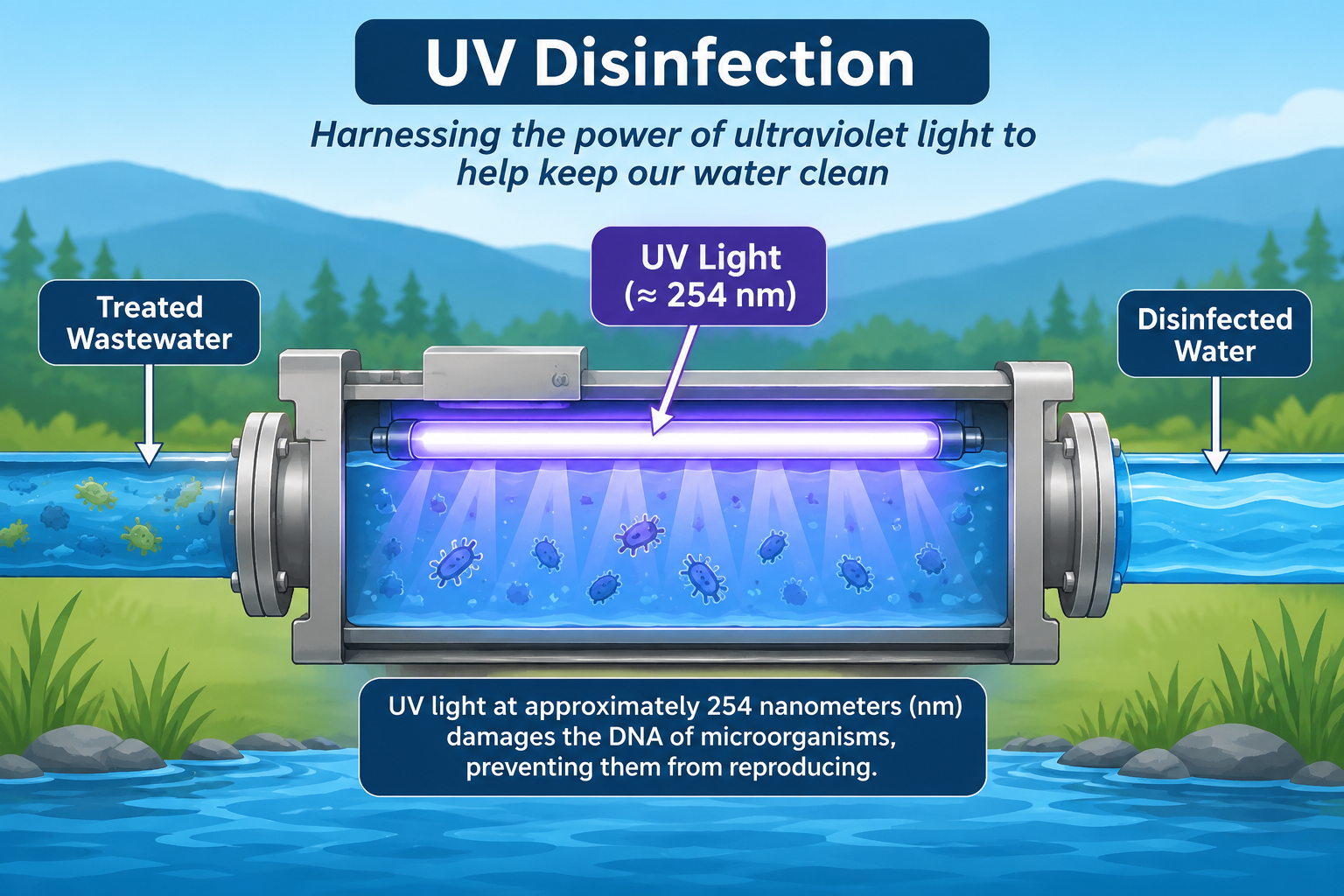
Pictured above we can see the microorganisms that had been in the water before the UV light has been killed off and reached the final stage of disinfection. The UV rays damage the microorganisms ability to reproduce and destroy the pathogens as well.
What Are the Similarities and Differences Between Chlorine and UV?
Although chlorine and UV use different methods, they share the same primary goal: reducing harmful microorganisms in treated wastewater before it is released back into the environment. Both are proven disinfection technologies that can effectively treat wastewater when properly designed, operated, and maintained.
The biggest difference is how they accomplish this.
Chlorine uses a chemical disinfectant that reacts with microorganisms in the water. One advantage is that chlorine can leave a residual disinfectant in the water, providing continued disinfection. However, chlorine requires chemical storage, handling, and monitoring. Residual chlorine can also be harmful to aquatic life, which is why we have to meet a chlorine residual on our discharging permit.
UV disinfection takes a different approach by using light rather than chemicals. The UV light damages microorganisms so they cannot reproduce. Because no chlorine is added, there is no chlorine residual left in the treated water. UV also eliminates the need for operators to store and handle chlorine disinfectant chemicals. While UV avoids those chemical-related concerns, it does require electricity, routine lamp cleaning and replacement, and water that is clear enough for the UV light to work effectively.
Neither technology is automatically better in every situation. Each has its own advantages and operating requirements. The decision to use UV at Waterville Valley is part of our effort to improve worker safety, reduce chemical-related costs, and modernize our treatment facility.
Looking Ahead
Moving to UV disinfection is one of the improvements being planned as part of Waterville Valley's wastewater treatment plant upgrade. While chlorine has served our community well, newer technologies give us opportunities to improve operational safety, efficiency, and environmental stewardship.
As we continue planning for the future of our wastewater treatment facility, our goal remains the same: protecting the environment and providing reliable wastewater treatment for the Waterville Valley community.